







Briggs training and advice

Pre-Shift Forklift Truck Checks

If your business relies on forklifts, you already know how essential they are to your day-to-day operations. From loading and unloading deliveries to moving stock around the warehouse, forklifts keep your workflow efficient and productive. However, they also present significant safety risks if businesses don’t keep them properly maintained and inspected. By completing these forklift checks before every shift, operators can help prevent accidents and reduce costly downtime. They’ll also help ensure compliance with UK health and safety regulations.

Why Do Pre-Shift Forklift Checks Matter?

A forklift that develops a fault during operation can quickly become dangerous. Issues such as worn tyres, faulty brakes, leaking hydraulics or damaged forks can lead to:

  • injuries to staff
  • accidents
  • damage to stock

Daily inspections are essential because they help operators:

  • Improve workplace safety
  • Identify faults before they become serious
  • Prevent unexpected breakdowns
  • Reduce repair costs
  • Support LOLER and PUWER compliance
  • Extend forklift lifespan

In many industries, businesses that fail to complete regular forklift inspections can also face insurance and liability issues in the event that an incident does occur.

Key Daily Forklift Checks Operators Should Perform

Please note that these points are general guidance for forklifts only. It’s essential for all forklift operators to also adhere to the specific manufacturer’s guidance for their truck.

Visual inspection

A quick walkaround inspection often reveals problems that might otherwise go unnoticed.

First, check overall cleanliness and visibility. A clean forklift is often easier to inspect properly and safer to operate.

Operators should also check for:

  • Loose panels
  • Oil spots underneath the machine
  • Damage to overhead guards
  • Missing bolts or guards

Tyres and Wheels

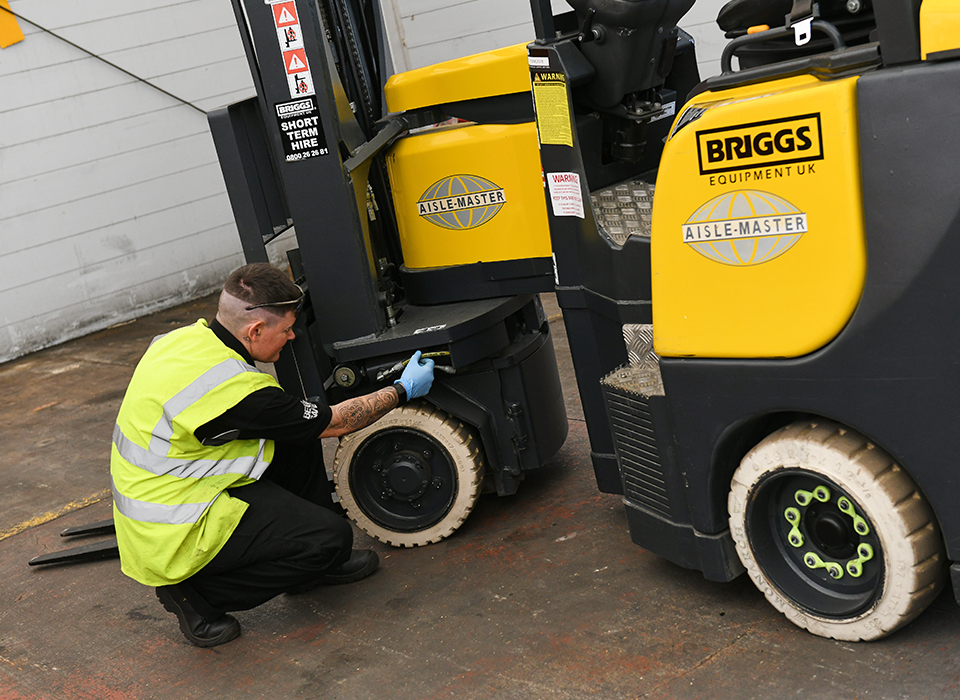
Tyres play a major role in forklift stability and safe handling. Damaged or worn tyres can affect steering, braking, and load balance.

Operators should check for:

  • Excessive tyre wear
  • Cuts or cracks
  • Embedded debris
  • Damaged wheel nuts
  • Low pressure on pneumatic tyres

Solid tyres should also be inspected for chunking or separation.

Forks and Mast

The forks are responsible for carrying the entire load. This makes them one of the most critical safety components.

During a pre-shift check, inspect for:

  • Cracks or bends
  • Uneven fork height
  • Excessive wear
  • Damaged locking pins

Operators should also check the following features of the mast:

  • Chain condition and tension
  • Movement, ensuring the mast moves smoothly without jerking or unusual noises
  • Mast attachment
  • Overhead guard

Hydraulic System

Hydraulic faults can lead to lifting failures and safety hazards.

Look for:

  • Hydraulic fluid leaks
  • Loose fittings
  • Damaged hoses
  • Slow or inconsistent lifting

Any leak should be reported immediately, as hydraulic pressure systems can become dangerous if compromised.

Brakes and Steering

Faulty steering or brakes can make a forklift unsafe to operate.

Before use, operators should test:

  • Foot brake response
  • Handbrake effectiveness
  • Steering movement
  • Unusual resistance or noises

If braking feels weak or inconsistent, the forklift should be taken out of service immediately.

Warning Lights and Safety Features

Safety systems are there to protect both operators and pedestrians.

Check that all the following are working correctly:

  • Warning lights
  • Reverse alarm
  • Horn
  • Beacon lights
  • Seatbelt
  • Mirrors
  • Camera systems

These features are especially important in busy warehouses and shared workspaces.

Engine or Battery

For the engine/battery compartment, required daily checks will depend on how your forklift is powered. Refer to the operator manual if you’re not sure.

LPG or Diesel Forklifts

Within the engine compartment, make sure there are no

  • Oils
  • Lubricants
  • Fuel
  • Other organic dust or fibres

Check the levels of fuel, coolant, engine oil and hydraulic oil and top up where necessary

Electric Forklifts

If your forklifts are powered by electricity, these are specific checks operators should complete:

  • Look at the general cleanliness of the battery compartment, and ensure the battery itself is secure
  • Check cable connections for worn or loose wires

Load Capacity Plate

The forklift’s data plate provides vital information about safe operating limits.

Ensure:

  • The plate is readable
  • Capacity markings are clear
  • Attachments match the listed specifications

Operating a forklift beyond its rated capacity can lead to tip-overs and serious accidents.

What Should I Do If I Find a Fault?

If any defect affects safe operation, the forklift should not be used until it has been inspected and repaired by a qualified technician.

Operators should:

  • Report the issue immediately
  • Remove the forklift from service if necessary
  • Record the fault in the inspection log
  • Inform supervisors or maintenance staff

Ignoring small faults often leads to larger repair costs and increased safety risks later.

Daily Forklift Checks Support Compliance and Workplace Safety

Under UK regulations such as PUWER (Provision and Use of Work Equipment Regulations) and LOLER (Lifting Operations and Lifting Equipment Regulations), employers have a duty to ensure forklifts remain safe and properly maintained.

Daily forklift checks are an important part of meeting these legal obligations and creating a safer working environment for everyone on site.

Final Thoughts

Forklift inspections only take a few minutes, but they can prevent major accidents, equipment failures, and expensive downtime. A consistent pre-shift checking routine helps operators identify issues early and ensures forklifts remain safe, reliable, and compliant.

Scroll to Top