




So far, our Back To Basics series has covered materials handling equipment, industrial cleaning machines and specialist warehouse equipment. In this week’s instalment, we’re exploring what powered access equipment is and why businesses need these machines.
Completing tasks at height can be tricky without the right equipment. However, powered access equipment is specially designed machinery which enables you to complete those tasks safely and efficiently.
What is powered access equipment?
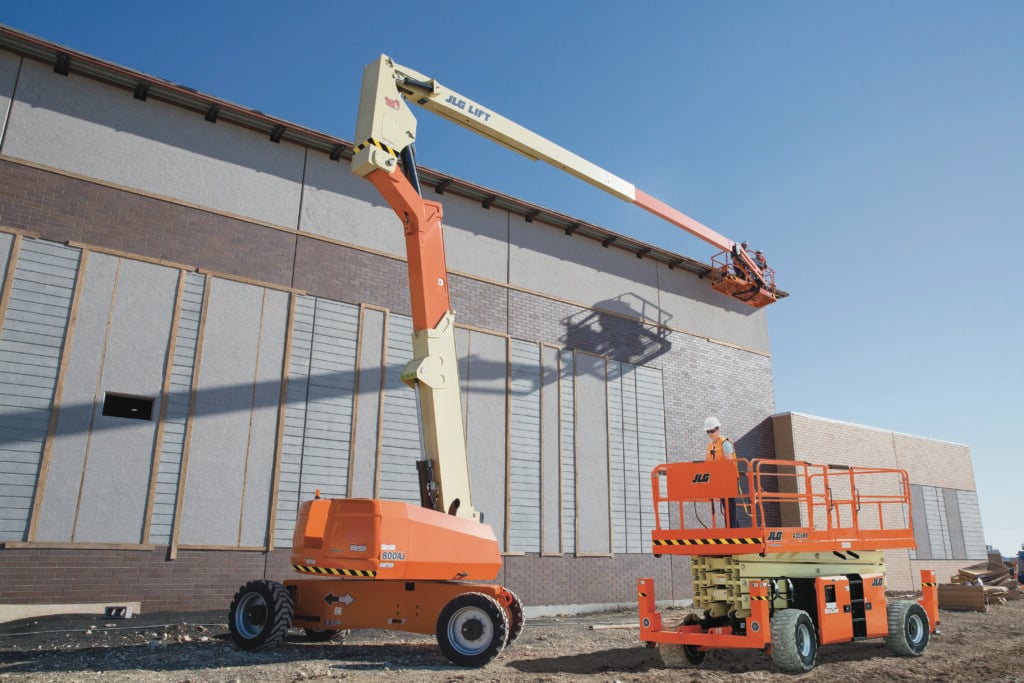
Powered access equipment, also often referred to as MEWPs or AWPs, is lifting machinery which enables workers to perform tasks at height safely. Typically, these machines have a mobile design so they can be moved easily around the site to where they are needed. They feature an extendable mast to raise the platform to a range of heights in a controlled manner. Manufactured by the likes of JLG and Genie, access equipment is used in industries world-wide. At Briggs Equipment, we offer a broad range of aerial work platforms for hire with our Briggs Finance packages to suit your business.
What are other names for powered access equipment?
Other terms used to refer to access equipment include MEWP and AWP.
What does MEWP stand for?
MEWP stands for mobile elevating work platform and refers to work platforms that can be moved so that its operators to work safely in high spaces. They are a form of powered access equipment that can come in self-propelled, diesel, and electric versions. There are even rough-terrain models which offer versatility with their ability to be used both indoors and outdoors. Some MEWPs can be driven from the platform. This means the machine can be repositioned without you having to exit the platform, thus increasing efficiency.
What does AWP stand for?
AWP stands for aerial work platform. Similarly to MEWPs, these machines raise the operator and their work tools to the required height in a safe and controlled manner. Whilst MEWP refers more to lifts that can move, AWPs can refer to all lifting platforms for working at height.
What are types of powered access equipment?
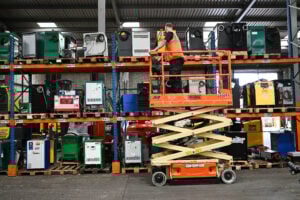
Scissor Lifts
Rising vertically, scissor lifts have a long platform which is ideal for tasks which require wider coverage area. They also offer the space to be able to lift more than one person to complete the task at hand. The prominent featuire of these lifts is their criss-cross lifting mechanism, which rises vertically.
Telescopic Boom Lifts
Equipped with a small platform, the telescopic boom lift features a straight mast which rises at an angle and extends to reach the required height.
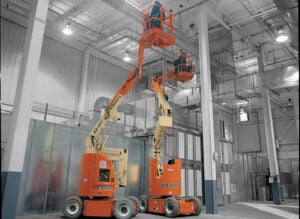
Articulated Boom Lifts
Unlike the telescopic boom lifts, the articulated boom lift features a “jointed” mast which can reach up, around and over obstacles. This lift type offers you greater control to reach the most awkward spaces.
Van-Mounted Access Platforms
Arguably the most portable of the designs for outdoor use. This type of lift is ready-mounted on a van which forms a secure platform for the machine. Being ready-mounted on a vehicle also means this lift can be transported beyond your own premises with little hassle.
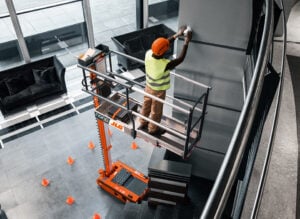
Vertical Mast Lifts
Ideal for tasks that are just out of reach or indoors, vertical mast lifts have a more compact design when not in use. This means they can operate in tight spaces and require less space to be stored in.
Spider Lifts
Whilst the mast type can vary between telescopic or articulated depending on the model, the stand out feature of the spider lift is the legs that extend from the base to create a secure foundation.
Do you need training for powered access equipment?
As with any form of equipment, safety is the priority. Therefore, you should always undergo a training course to operate powered access equipment. At Briggs Equipment, we can arrange IPAF training courses to ensure that you are up to speed on all safety and operating standards. You can learn more about MEWP training in our essential introduction to MEWP training.
Is powered access equipment safe?
If you have taken your safety training and your machine has passed its LOLER inspection, then lifting equipment is safe. Boom lifts and scissor lifts are designed specifically to make working at height a safe practice, so they are usually packed with safety features. You should always wear a harness when using an aerial work platform and always use in accordance with the lifting limits of the machine.
What is a LOLER?
LOLER stands for Lifting Operations and Lifting Equipment Regulations and is a standard industry regulation which ensures the safe use and operation of machinery and equipment in the workplace.
How can hiring powered access equipment benefit my business?
Hiring powered access equipment can be a cost-effective solution for your business. When one-off tasks arise that involve working at height, our short-term hire packages mean you can receive the equipment you need for a day or two instead of purchasing a new machine. Alternatively, if your business involves regularly working at height, you may wish to consider long term rental on one of our contract hire agreements. With tailored financial packages available to suit your business you can make your budget go that little bit further.
Discover more about equipment hire and reasons to hire from Briggs Equipment in What You Need To Know Before Hiring A Forklift Or Other MHE.
It’s now easier than ever to hire a boom lift or scissor lift through Briggs Equipment. Enquire today to speak to a member of our team.
Tel: 03301239850
Email: info@briggsequipment.co.uk