













The longstanding 15-year partnership between Briggs Equipment and Whyte & Mackay continues to grow stronger as we work together to support their ambitious sustainability goals.
A key focus of our collaboration is the electrification of their Material Handling Equipment (MHE) fleet. We were subsequently able to helping them reduce their carbon footprint and transition towards a greener future.
Whyte & Mackay
Founded in 1844, Whyte & Mackay is renowned for diverse collection of award-winning whisky brands, including The Dalmore, Fettercairn, Jura, and Tamnavulin. As part of their commitment to environmental responsibility, they have set ambitious targets to reduce their carbon emissions as part of their Green Print Strategy. In line with this vision, we are helping to decarbonise their operations across eight different sites.
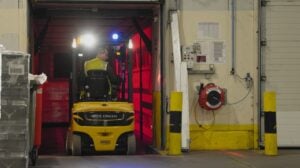
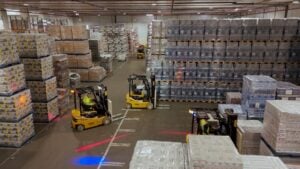
At their Grangemouth facility, near Edinburgh, Whyte & Mackay made a significant leap forward by switching their fleet of forklifts from LPG to lead-acid battery-powered Yale trucks. The 10 new electric forklift trucks, are contributing to a substantial reduction in their environmental impact. Briggs also delivered a powered pallet truck and a battery stacker, with on-site battery-changing capabilities, further enhancing operational efficiency and sustainable responsibility.
How Briggs Equipment Have Supported Towards Sustainability Goals?
Our approach began with a thorough consultation and in-depth discussion to understand Whyte & Mackay’s unique needs. We were able to design a tailored solution that would maximise the benefits while meeting the demands of their daily operations.
As part of our commitment to being at the forefront of innovation, we went above and beyond by developing a custom battery management system for Whyte & Mackay. Additionally, we identified an underutilised area on-site and transformed it into a safe, dedicated battery-changing zone. To ensure the smooth implementation of this system, we also provided comprehensive training for their team on how to safely handle and change the batteries.
Part of our Environmental, Social and Governance (ESG) strategy, is to support our customers with theirs. By supporting Whyte & Mackay in their decarbonisation efforts, we’re not only helping them to reduce their carbon footprint but also improving air quality and working conditions for their operators and staff. The electrification of their fleet has introduced new safety features too, ensuring operational compliance and employee wellbeing.
The Power Of Collaboration
This partnership represents the power of collaboration, and we are proud to continue working with Whyte & Mackay as they lead the way in sustainable practices within the whisky industry.
Kate Dranginis, Sustainability Lead at Whyte & Mackay said:
“Working with Briggs Equipment has been an essential part of our sustainability journey. The transition to electric was seamless, and the comprehensive support and training provided by Briggs has ensured that we can operate with enhanced efficiency and sustainability. Providing first class service and support is so important to this partnership, and it is something we can definitely say Briggs continue to deliver on.”
Craig McDowell, Senior Sales Executive, said:
“I know the Whyte and Mackay facility inside and out, and it’s been fantastic to be part of this journey with them, as they continue to grow and electrify their MHE.
Mike Parkin, Head of Sustainability and Solutions at Briggs Equipment added:
“Sharing sustainability goals and ESG strategies has never been more vital. By learning from each other, our businesses and supply chains can continue to make positive strides to a better future for all.”